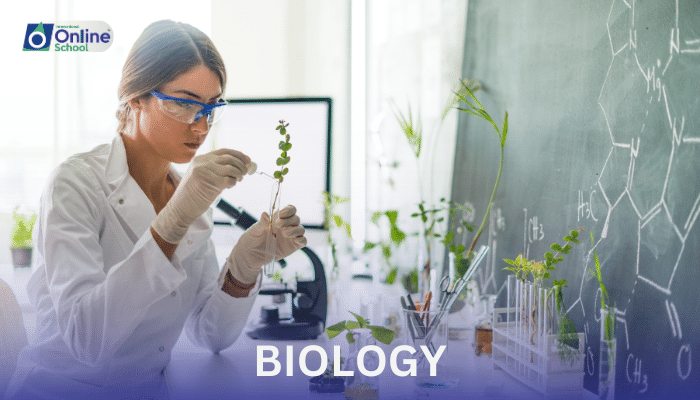
Lesson 01: Foundations of Biology

Lesson 1/105 | Study Time: 30 Min
Course: Biology IX
Lesson 01: Foundations of Biology

Learning Objectives:


i. Define biology and understand its significance in the study of life.


ii. Identify and describe the major divisions of biology: botany, zoology, and microbiology.


iii. Discuss the roles of these divisions in advancing our knowledge of the biological world.


Content:


Introduction to Biology:Biology is the scientific study of life and living organisms. It encompasses a broad spectrum of topics that are essential for understanding the complexities of life—from the smallest bacteria to the largest whales.


Significance of Biology: Biology helps us understand the living world and the ways organisms interact within it. This science is crucial for medical advancements, environmental conservation, and understanding the fundamental processes of life.


Major Divisions of Biology:


i. Botany:


Definition: The study of plants, including their structure, properties, and biochemical processes.


Role in Biology: Botany is vital for understanding photosynthesis, plant reproduction, and ecology, which have direct implications for food security and medicine.


ii. Zoology:


Definition: The branch of biology that focuses on the animal kingdom, including the structure, embryology, evolution, classification, habits, and distribution of all animals.


Role in Biology: Zoology provides insights into animal behavior, conservation efforts, and the role of animals in ecosystems


iii. Microbiology:


Definition: The study of microscopic organisms, such as bacteria, viruses, archaea, fungi, and protozoa.


Role in Biology: Microbiology is critical for understanding diseases, biodegradation, and the fundamental life processes of cellular organisms.


Important Questions for Self-Study:


  • i. What is the definition of biology?


  • ii. Why is the study of biology important to society and the environment?


  • iii. What are the main differences between botany, zoology, and microbiology?


  • iv. How does botany contribute to our food security and medicinal knowledge?


  • v. In what ways does zoology help with wildlife conservation and understanding animal behavior?


  • vi. Describe the impact of microbiology on our understanding of diseases and the role of microorganisms in ecosystems.


  • vii. How do the major divisions of biology complement each other?


  • viii. Can you think of an example where knowledge from botany, zoology, and microbiology is used together to solve a problem?


  • ix. What role does each division play in the development of new technologies or therapies?


  • x. How has the study of biology evolved over time, and what might be some future directions for each of its major divisions?


Fatima Khan

Fatima Khan

Product Designer
Profile

Class Sessions

1- Lesson 01: Foundations of Biology 2- Lesson 02: Exploring Biological Branches 3- Lesson 03: Biology and Other Sciences 4- Lesson 07: Bioelements - The Fundamentals of Life 5- Lesson 08: Biomolecules - The Chemical Basis of Life 6- Lesson 10: Cooperation in Life - Division of Labor 7- Lesson 09: The Hierarchy of Life 8- Lesson 04: Biology in Professional Practice 9- Lesson 01: The Biological Method - Recognition and Hypothesis Formation 10- Lesson 05: Classifying Life 11- Lesson 06: Biology and Islam 12- Lesson 04: Ratio and Proportion in Biological Problem-Solving 13- Lesson 05: Data Analysis in Biology 14- Lesson 02: Experimentation and Inference in Biology 15- Lesson 03: Study of Malaria through the Biological Method 16- Lesson 07: Biological Terminologies and Concepts Review 17- Lesson 06: Mathematics in Biological Sciences 18- Lesson 01: Biodiversity 19- Lesson 02: Aims and Principles of Classification in Biology 20- Lesson 03: History of Classification - Tracing the Evolution from Two to Five Kingdoms 21- Lesson 04: The Five Kingdom System of Classification 22- Lesson 05: Binomial Nomenclature - Naming the Diversity of Life 23- Lesson 06: Biodiversity and Its Conservation 24- Lesson 07: Human Impact on Biodiversity 25- Lesson 08: Pollution, Deforestation, and Their Effects on Biodiversity 26- Lesson 01: Microscopy and the Emergence of Cell Theory 27- Lesson 02: Unveiling the Microscopic World: Light and Electron Microscopy 28- Lesson 03: The Pillars of Cell Theory: Contributions of Hooke, Brown, and Pasteur 29- Lesson 04: Organelles of the Animal Cell - Nucleus and Cell Membrane 30- Lesson 05: The Cytoplasmic Matrix: Ribosomes and the Endoplasmic Reticulum 31- Lesson 06: The Cell's Processing Plants: Golgi Apparatus, Lysosomes, and Mitochondria 32- Lesson 07: The Support and Division Framework: Centrioles and Cytoskeleton 33- Lesson 08: Cilia and Flagella: The Cell's Movers and Shakers 34- Lesson 09: The Plant Cell: Cell Wall and Vacuoles 35- Lesson 10: The Plant Cell and Its Plastids 36- Lesson 01: The Rhythm of Life: The Cell Cycle 37- Lesson 02: Interphase: The Foundation of the Cell Cycle 38- Lesson 03: S-Phase: The Synthesis Core of Interphase 39- Lesson 04: The Stages of Mitosis - Cell Division Unveiled 40- Lesson 05: Mitosis: The Pathway to Genetic Fidelity and Organismal Growth 41- Lesson 07: Meiosis: The Process of Reduction Division 42- Lesson 06: Comparing Cell Division: Mitosis in Plant vs. Animal Cells 43- Lesson 08: Unraveling Meiosis I: The Prelude to Genetic Diversity 44- Lesson 09: Finalizing Division: The Stages of Meiosis II 45- Lesson 10: The Essence of Meiosis: Ensuring Diversity and Continuity 46- Lesson 01: The Dynamics of Life: Understanding Metabolism and Enzymes 47- Lesson 02: Enzymes: Accelerators of Biochemical Reactions 48- Lesson 03: The Influencers of Enzyme Activity: pH, Temperature, and Substrate Concentration 49- Lesson 05: The Specificity of Enzymes: A Study of Shape and Function 50- Lesson 04: Deciphering Enzyme Mechanisms: Lock and Key vs. Induced Fit 51- Lesson 01: Bioenergetics: The Energy Flow in Biological Systems 52- Lesson 02: Oxidation-Reduction Reactions: The Currency of Energy in Biology 53- Lesson 03: Energizing Life: Oxidation-Reduction Reactions and the ATP-ADP Cycle 54- Lesson 04: Photosynthesis: The Synthesis of Life 55- Lesson 05: Photosynthesis: The Foundation of Life's Energy Pyramid 56- Lesson 06: The Sustenance of Plants: Intake of Carbon Dioxide and Water 57- Lesson 07: Limiting Factors in Photosynthesis: Understanding Plant Productivity 58- Lesson 08: The Power Without Oxygen: Anaerobic Respiration 59- Lesson 09: Aerobic Respiration: Harnessing Energy from Oxygen 60- Lesson 10: Navigating Nutritional Challenges: PEM, MDD, and OIN 61- Lesson 01: Mineral Nutrition in Plants: From Soil to Cell 62- Lesson 02: The Essentials of Plant Nutrition: Nitrogen and Magnesium 63- Lesson 03: Fertilizers in Agriculture: Boon and Bane 64- Lesson 04: The Building Blocks of Nutrition: Carbohydrates, Proteins, and Fats 65- Lesson 05: Essential Vitamins: A, C, and D – Sources and Functions 66- Lesson 06: Nutritional Essentials: Calcium, Iron, and Vitamins A, C, D 67- Lesson 07: The Fundamentals of Hydration and Fiber 68- Lesson 08: Crafting Your Plate: A Guide to a Balanced Diet 69- Lesson 09: Understanding Nutritional Problems: The Protein-Energy Puzzle 70- Lesson 01: Plant Transport Systems: Roots and Nutrient Uptake 71- Lesson 02: Transpiration: The Vital Water Movement in Plants 72- Lesson 03: Transpiration: Plant Life's Balancing Act 73- Lesson 04: The Dynamics of Transpiration: Environmental Influences 74- Lesson 05: Life's Pathways: The Journey of Water and Food in Plants 75- Lesson 06: The Life-Sustaining Fluid: Blood and Its Components 76- Lesson 07: Blood Typing: Understanding ABO and Rh Systems 77- Lesson 08: The Matching Game: Blood Group Donors and Recipients 78- Lesson 09: Blood Disorders: Understanding Leukemia and Thalassemia 79- Lesson 11: Foundations of Biology - Summary of Terminologies 80- Lesson 11: The Cellular Tapestry of a Leaf 81- Lesson 12: Form Meets Function: Specialized Cells and Open Systems 82- Lesson 13: The World of Cells: Prokaryotic vs Eukaryotic 83- Lesson 14: The Geometry of Survival: Cell Size, Shape, and Surface Area to Volume Ratio 84- Lesson 15: The Balancing Act: Surface Area to Volume Ratio and Cell Size 85- Lesson 16: The Movement of Substances: Cellular Transport Mechanisms 86- Lesson 17: Crossing Borders: Passive vs. Active Transport in Cells 87- Lesson 18: Turgor Pressure: The Plant Cell's Balancing Act 88- Lesson 19: Plasmolysis: When Cells Shrink from Osmotic Pressure 89- Lesson 20: The Cell Membrane: Guardian of Cellular Equilibrium 90- Lesson 21: The Dynamic Cell: Endocytosis and Exocytosis 91- Lesson 22: Tissues: The Teamwork of Cells 92- Lesson 23: The Fabric of Life: Major Animal Tissue Types 93- Lesson 10: Comparing Aerobic and Anaerobic Respiration: The Energy Yield 94- Lesson 24: The Architectural Wonders of Plant Tissues 95- Lesson 11: The Cycle of Life: Photosynthesis vs. Respiration 96- Lesson 11: Divergent Paths: Contrasting Mitosis and Meiosis 97- Lesson Title 11: The Impact of Malnutrition: From Starvation to Obesity 98- Lesson 12: Unraveling Famine: Causes and Consequences 99- Lesson 13: Nutrient's Voyage: The Digestive Process 100- Lesson 14: Mapping the Alimentary Canal: A Tour Through the Digestive Highway 101- Lesson 15: The Digestive Trail: From Ingestion to Egestion 102- Lesson 12: Life and Death of Cells: Necrosis vs. Apoptosis 103- Lesson 16: The Dynamics of Digestion: Swallowing, Peristalsis, and Enzymatic Action 104- Lesson 17: The Liver: The Body's Metabolic Powerhouse 105- Lesson 18: Gut Reactions: Understanding Digestive Disorders